Construction can improve a street without treating the months in between as somebody else’s problem.
The hidden journey around the barrier
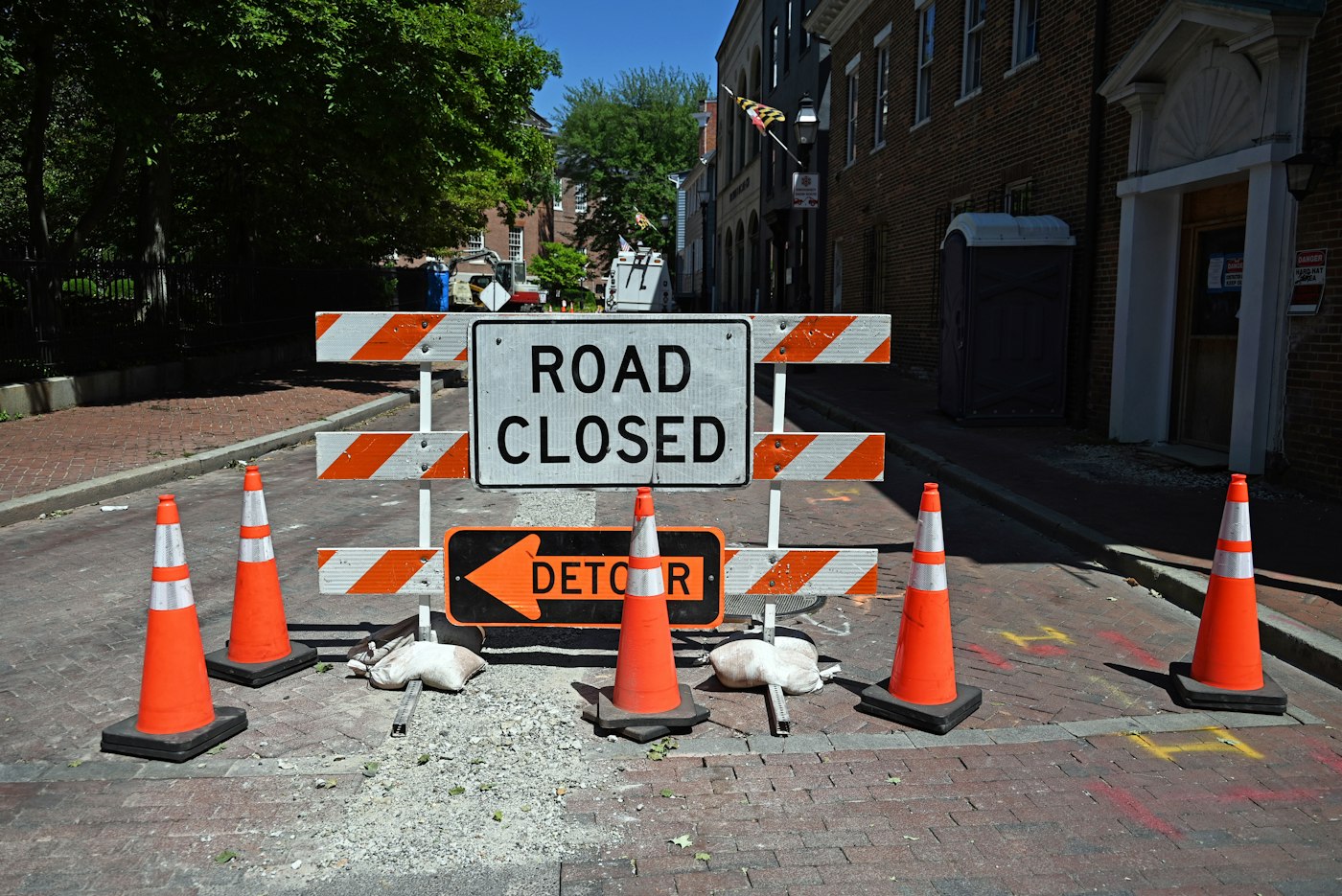
A closed sidewalk may appear on a plan as a short diversion. On the ground, that diversion can involve a steep curb, an unlit section or a long walk back to the previous crossing. People carrying bags or using mobility aids encounter a different project from the person viewing the worksite from a vehicle. Temporary conditions are still real conditions.
Give the alternative the same attention
Mark a continuous route before closing the original one. Check its width, surface, lighting and connection to crossings at the times people use it. A sign pointing vaguely across the road does not provide a complete solution. Businesses and residents also need understandable information about access, expected changes and whom to contact when the arrangement fails.
Update information when the site changes
A route that worked last week may no longer work after equipment moves. Someone should be responsible for inspecting the public journey, rather than assuming that safety inside the worksite automatically means access outside it is adequate. Clear updates do not require dramatic announcements. They require a maintained source of information that reflects what a pedestrian will actually encounter today.
Temporary does not mean that everyday access can be optional.
A thought to take with you
A construction project is experienced throughout its duration, not only at completion. Looking after the transition can make the eventual improvement easier to trust because people have already seen their needs taken seriously.
An opinion essay prepared by The Everyday Observer with AI assistance, not a field report or survey. Images illustrate themes rather than specific people or events.