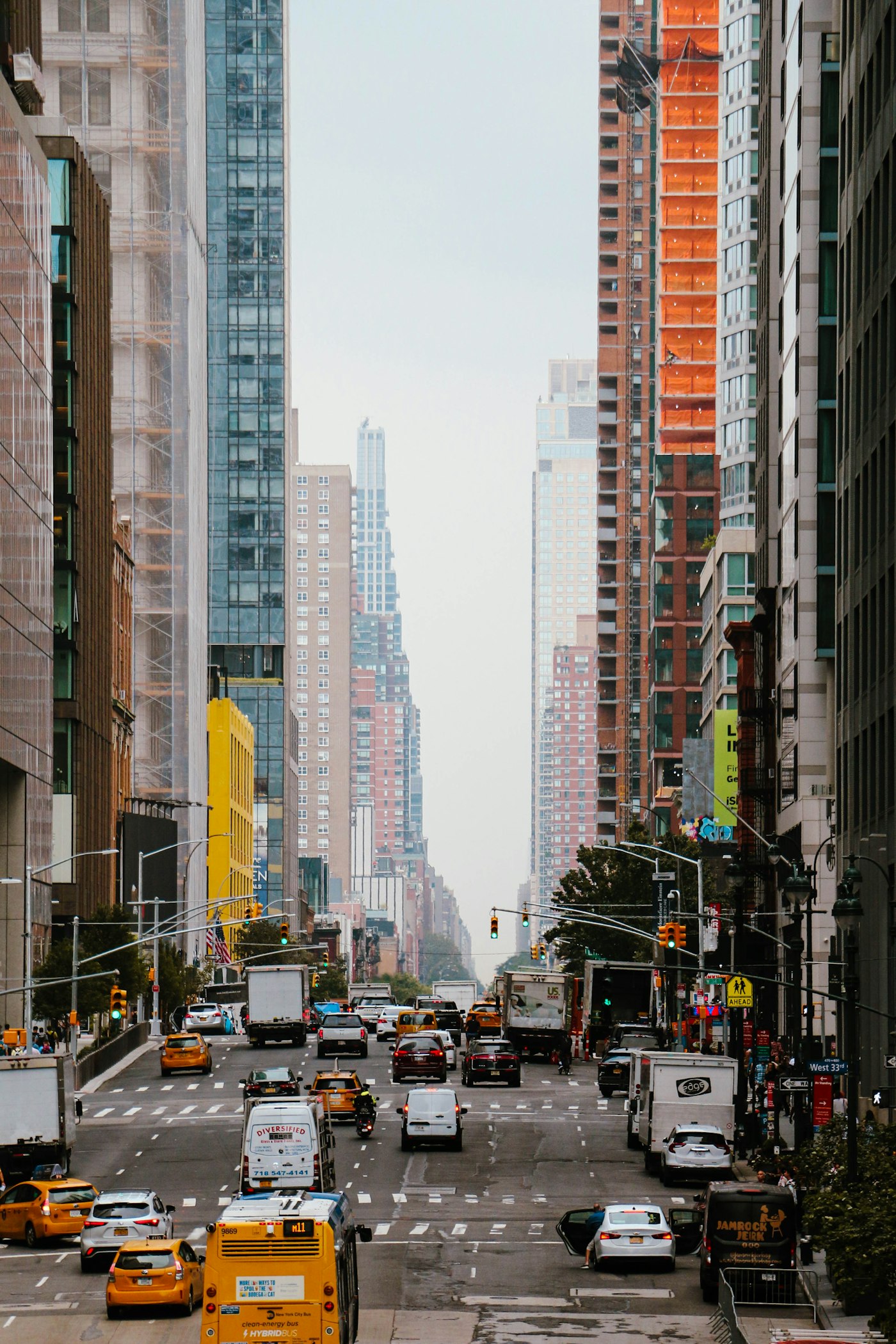
Deliveries, buses, bicycles and pedestrians meet in a strip of road that deserves deliberate planning.
A small area with a large workload
At a busy street edge, a delivery driver may need to stop while a cyclist needs a clear lane and a passenger needs an accessible bus entrance. Treating every conflict as an individual failure misses the fact that several necessary activities have been assigned the same limited space. Without workable arrangements, people improvise, and the least protected users often absorb the consequences.
Start with the actual uses
Observe when deliveries arrive, where passengers wait and how vehicles turn. A designated stopping area helps only if it is usable at the relevant time and does not force someone else into an unsafe route. Rules need to account for changing demand across a day, rather than assuming a curb serves one purpose continuously. Clear markings should match the arrangement people are expected to follow.
Design and enforcement belong together
A rule that cannot reasonably be followed will generate repeated exceptions. At the same time, a practical design needs consistent enforcement to remain usable. Listen to workers and residents who encounter the space repeatedly, and review unintended effects after a change. The aim is not to give one group every convenience, but to make the tradeoffs explicit and avoid placing all inconvenience on people with the fewest alternatives.
Good street design makes legitimate needs less likely to collide.
A thought to take with you
A well-managed curb may look unremarkable because its conflicts have become less visible. That everyday reliability is a worthwhile outcome, even if it produces less dramatic imagery than a major construction project.
An opinion essay prepared by The Everyday Observer with AI assistance, not a field report or survey. Images illustrate themes rather than specific people or events.